
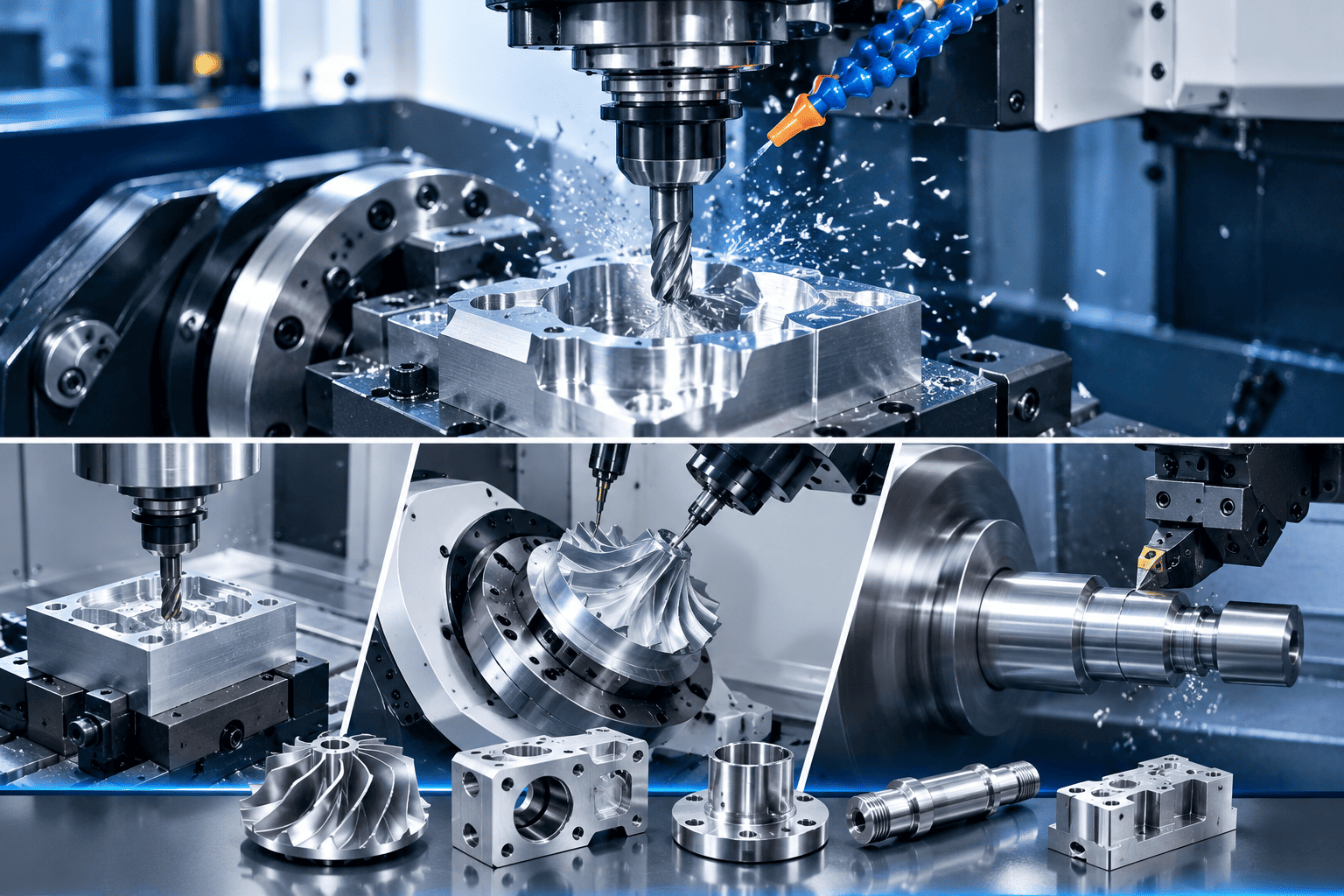
Precision Machining: CNC Milling and Turning with 3-Axis and 5-Axis Technology
Modern manufacturing requires accuracy, consistency and efficiency. From engineering components and prototypes to moulds, tooling and production parts, precision machining plays an important role in producing high-quality components. Advanced CNC technology allows manufacturers to achieve accurate dimensions, repeatable results and complex geometries while maintaining efficient production processes.
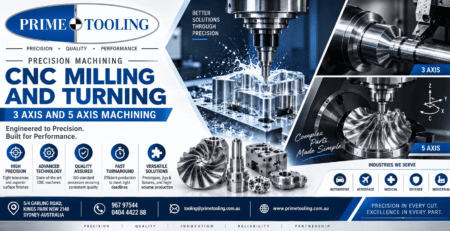
Prime Tooling provides CNC machining and engineering services, including precision CNC milling and precision CNC turning, supporting a range of manufacturing and tooling requirements.
What Is Precision Machining?
Precision machining is a manufacturing process used to remove material from a workpiece to create a component with accurate dimensions and detailed features. Computer Numerical Control (CNC) machines follow programmed instructions to control cutting tools and produce components according to engineering drawings or CAD models.
Compared with conventional machining, CNC machining provides greater consistency and repeatability. This makes it suitable for applications where dimensional accuracy, surface quality and reliable production are important.
Precision machining can be used for individual components, prototypes, tooling, fixtures and production parts.
CNC Milling for Accurate Components
CNC milling uses rotating cutting tools to remove material from a workpiece. Depending on the machine configuration and component requirements, milling can produce slots, pockets, holes, contours, profiles and complex three-dimensional features.
Precision CNC milling is particularly useful when components require accurate geometry and repeatable dimensions. It can be used with a variety of engineering materials and is suitable for manufacturing tooling components, machine parts, prototypes, mould components and other engineered products.
The CNC process also allows machining instructions to be programmed from CAD/CAM data, helping improve consistency between individual components.
CNC Turning for Cylindrical Components
CNC turning is another important precision machining process. During turning, the workpiece rotates while a cutting tool removes material to produce the required shape.
CNC turning is commonly used for components with cylindrical or rotational features, including shafts, pins, bushes, spacers and other engineered parts.
Precision CNC turning can provide controlled dimensions and repeatable results, making it suitable for both prototype development and manufacturing applications where consistency is important.
Understanding 3-Axis CNC Machining
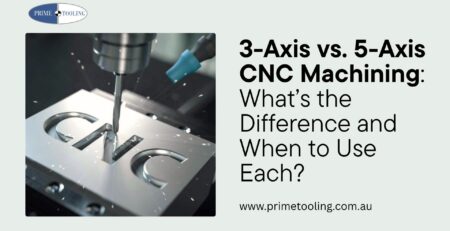
3-axis CNC machining operates along three primary linear axes: X, Y and Z. This configuration is widely used for components with relatively straightforward geometries and features that can be machined efficiently from suitable orientations.
Typical applications include:
- Flat surfaces and profiles
- Slots and pockets
- Drilling operations
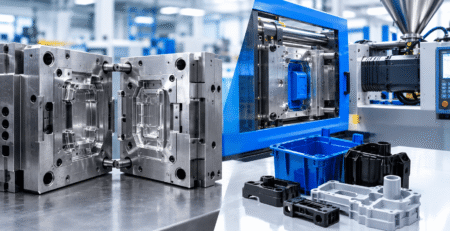
- Mould components
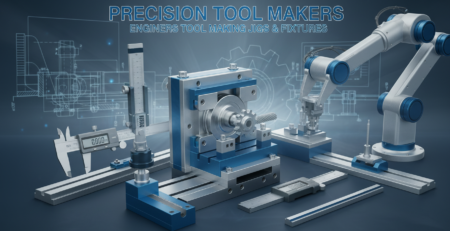
- Fixtures and tooling
- General engineering components
- Prototype parts
For many applications, 3-axis machining provides an efficient and cost-effective approach to producing accurate components.
What Is 5-Axis CNC Machining?
5-axis CNC machining adds two rotational movements to the traditional X, Y and Z linear axes. This allows the cutting tool or workpiece to be positioned at multiple angles during machining.
The additional movement provides greater flexibility when manufacturing components with complex surfaces, angled features, intricate contours and multiple machining faces.
5-axis machining can reduce the number of setups required for certain complex components. Fewer setups can help reduce handling, improve consistency between features and make it possible to access areas that may be difficult to machine using a conventional 3-axis process.
3-Axis vs 5-Axis Machining
The choice between 3-axis and 5-axis machining depends on the component design, material, tolerances, quantity and required features.
3-axis CNC machining is often suitable for relatively simple components and standard machining operations. It can provide an efficient solution where complex multi-angle machining is not required.
5-axis CNC machining is more suitable for components with complex geometry, multiple angled surfaces or features that require machining from different directions.
Selecting the appropriate machining method at the design stage can help optimise production time, tooling requirements and overall manufacturing efficiency.
Why Precision CNC Machining Matters
Accurate machining is essential when components must fit correctly within an assembly or perform reliably in a production environment. Even small dimensional variations can affect the performance of a finished product.
Precision CNC machining provides several important benefits, including:
- Consistent component dimensions
- Repeatable manufacturing results
- Accurate complex features
- Efficient material removal
- Improved production consistency
- Support for prototype and production requirements
- Compatibility with CAD/CAM manufacturing workflows
For tooling and engineering applications, these advantages can contribute to better-quality finished components and more predictable manufacturing processes.
CNC Machining for Prototyping and Engineering Parts
CNC machining is also valuable during product development. Prototypes can be machined before a product enters full-scale production, allowing engineers to evaluate dimensions, assembly, functionality and design requirements.
Prime Tooling’s services include individual parts machining and assembly, parts machining and fabrication, and prototype moulds and low-volume moulding.
This combination of machining and prototyping capability can help businesses move from an initial CAD design to a physical component more efficiently.
Choosing the Right CNC Machining Solution
Every component has different manufacturing requirements. Factors such as geometry, material, tolerances, surface finish, production quantity and required lead time should be considered before selecting a machining process.
An experienced machining and engineering team can assess the design and determine whether CNC milling, CNC turning, 3-axis machining or a more advanced machining approach is appropriate.
Prime Tooling is an Australian-owned precision toolmaking and engineering company based in Kings Park, NSW. The company has been established since 1999 and uses high-precision machinery and equipment for its manufacturing work.
Conclusion
Precision machining is an essential part of modern engineering and manufacturing. CNC milling and turning provide reliable methods for producing accurate components, while 3-axis and 5-axis machining offer different capabilities depending on component complexity.
From prototypes and individual engineering parts to tooling and mould components, choosing the right CNC machining process can improve accuracy, repeatability and production efficiency.
For businesses looking for precision machining and engineering solutions in Sydney, Prime Tooling offers CNC machining services alongside toolmaking, prototyping, design and engineering capabilities.

Leave a Reply